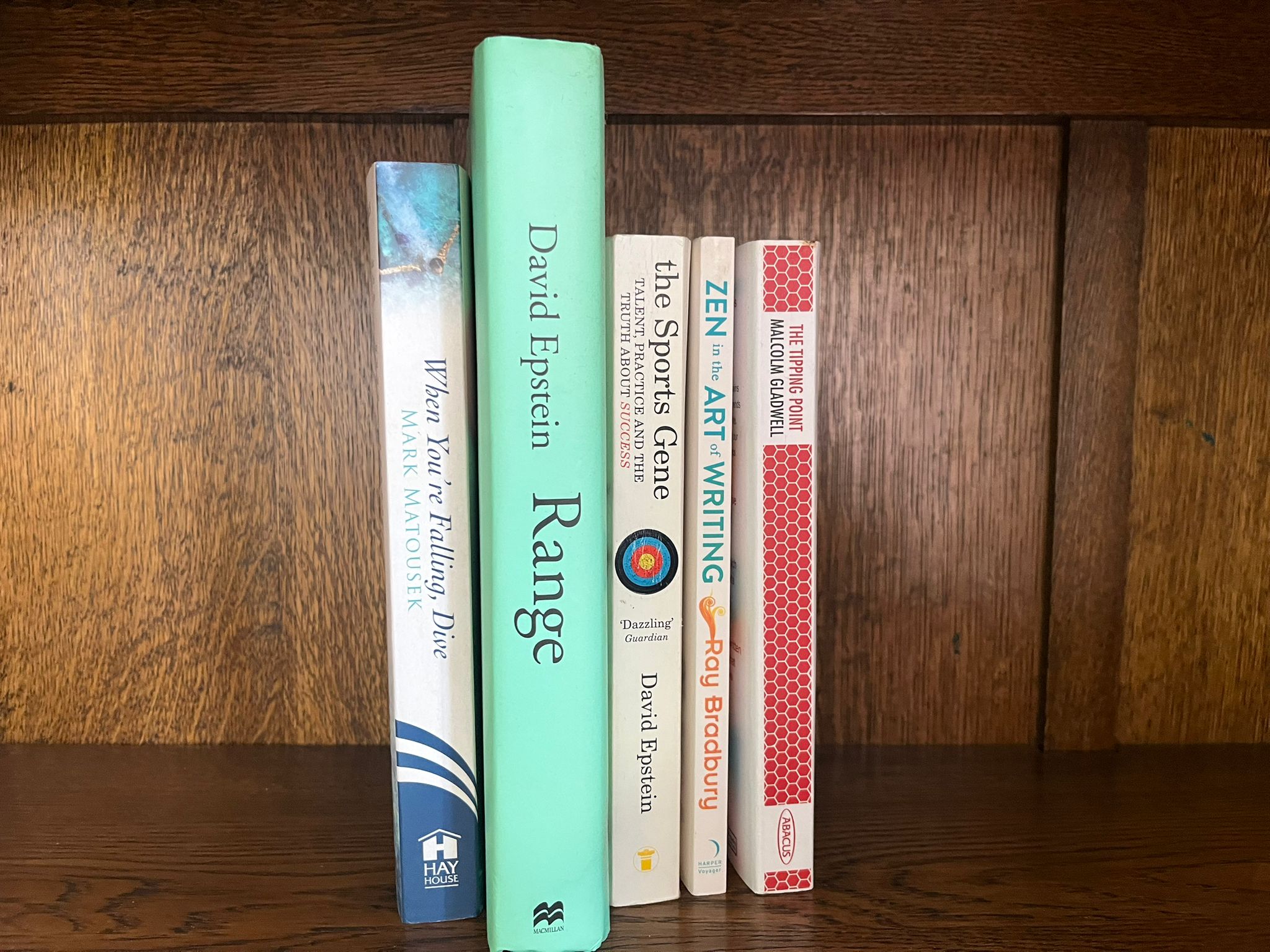
| ‘The biggest mistake in creativity is waiting for a good idea…. Your best work doesn’t come first; it comes after you have cleared out everything else.’ David Epstein. As I continue to get book four, ‘Body in the Thames’, ready for publication, the above quote in an X post by Epstein caught my eye. To any author, these words are reassuring. Sometimes ideas come in abundance, and words flow onto the page. Other times it is a hard slog. Now, obviously, I think (and hope) that my ideas for book four are good, that they progress the series and Tom’s character, as well as tying up loose ends about other officers, and keep readers entertained and captivated ahead of the books to come. But Epstein’s advice can be useful when you get bogged down. It is important to plough on, get something down, and then make it better in the later drafts. Epstein is currently promoting his new book, ‘Inside the Box: How Constraints Make Us Better,’ which is due out this month. It’s an interesting idea to apply to jobs and hobbies as, particularly in the arts world, we are often led to believe that more freedom leads to more creativity. He says that he reveals the secret of how great ideas emerge. ‘After twenty years studying high performers, I’ve found a pattern: the best ideas rarely come first. In studies of creative output, writing, music, science, and design, the high performers don’t start better; they produce more, including some mediocre ideas, and the best ideas come later. So lower the bar and keep going. Bad ideas aren’t failure.’ Having written in a previous newsletter about how the humour between characters in my books often doesn’t appear until the second draft, I can relate to this. Epstein continues, ‘A 1741 letter about Johann Sebastian Bach described how he worked. It said he couldn’t create his masterpieces without first playing inferior music. His superior ideas were the consequences of those inferior ones. Thomas Edison held over a thousand patents, most of them completely unimportant, but his successes – the lightbulb, the phonograph — were earth-shaking.’ He carries on with examples from music and writing. ‘Jeff Tweedy, of Wilco, intentionally lowers his standards when he’s stuck. “I write through songs that I don’t like. That frees me up to go to the next song.” Isabel Allende spends weeks at the start of novels writing material she knows will not get into the book, just to get moving. Psychologists call this “the creative cliff illusion,” we believe good ideas should arrive quicky, but studies show the opposite. Whether the task takes minutes or days, early output is rarely your best output.’ It is more difficult to apply it to the police when, particularly in a murder investigation, the first twenty-four hours are crucial. I don’t think a detective would get very far if they told their senior officer to bear with them as their better work would come later. However, in my books, we often see a seemingly hopeless situation with officers at a loss as to how to solve the crime. They do so by keeping at it, chipping away at leads, re-interviewing witnesses, pressing snouts and searching for evidence until a breakthrough is achieved. ‘Inside the Box: How Constraints Make Us Better’, cannot yet appear on my bookshelf, but Epstein’s previous work, ‘the Sports Gene’ and ‘Range’ are both pictured below, alongside some other works and ‘The Tipping Point’ by his associate Malcolm Gladwell. It was during the Covid lockdown that I collected together my ideas and rough work, and began to think seriously about writing a book. Although it contained plenty of details about the detective, Tom, it was lacking in plot and follow-through. Initially it was just one book, but as I wrote more, I realised the characters could take the reader on many adventures. You are yet to read this ‘first’ book, or attempt at a book, ‘Darkness to Light’. It has now become book six, or maybe seven, in this series, as I decided to start with more of Tom’s backstory. And, as it turns out, I followed Epstein’s advice without knowing it. The book was pretty rubbish when I first wrote it. But I have, hopefully, improved at my craft the more I have written, and that title will be ready for consumption next year. |
 |